A commercial door not latching may have a worn latch, a misaligned strike, a closing problem, or pressure from the door and frame. A closed-looking door is not necessarily secure. Record the symptoms, notify the property manager, and arrange an inspection without disabling exit hardware or altering a fire-rated opening.
Commercial Door Not Latching: What the Symptom Means
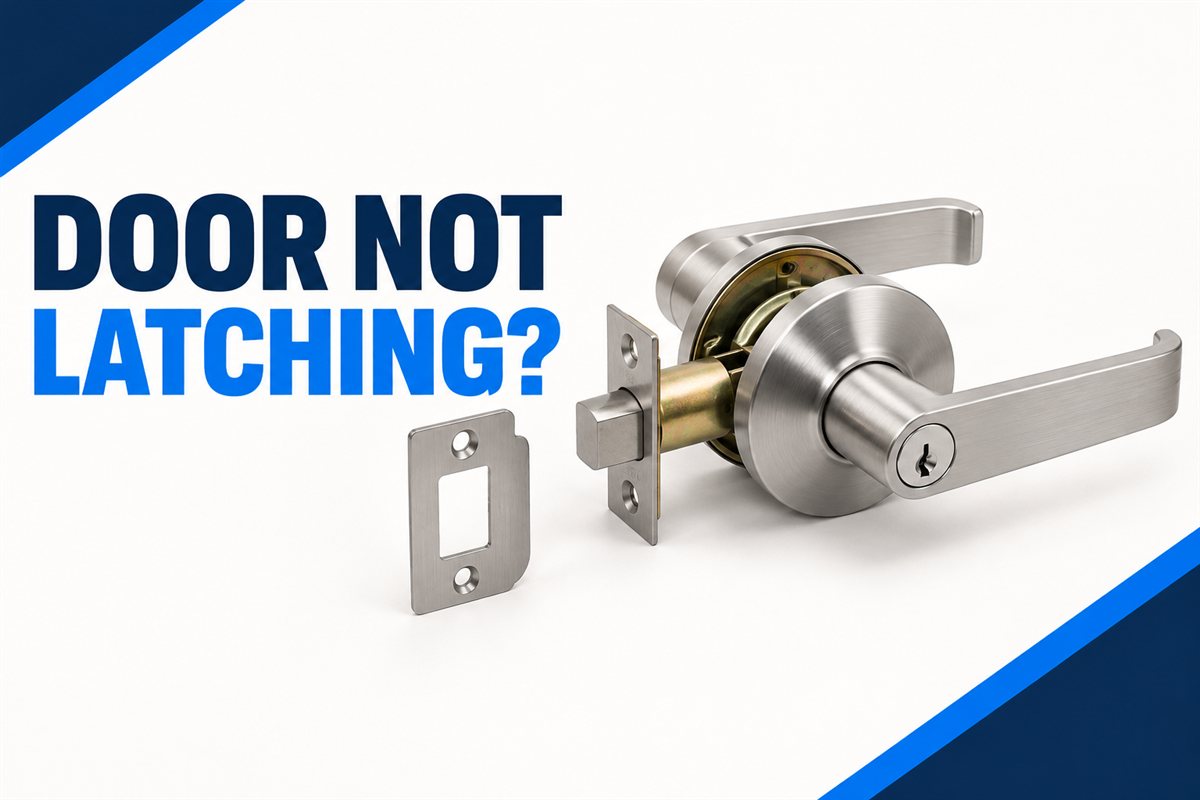
A latch is the part that engages the frame when the door closes. The strike is the receiving hardware on the frame. The cylinder controls key operation; the closer controls how the door moves. A problem with any part of that opening can look like a bad lock, even when replacing the cylinder would not solve it.
Before buying replacement hardware, describe what actually happens. Does the door stop short of the frame? Does the latch hit the strike instead of entering it? Does the opening appear closed but pull open without operating the handle? Does the problem occur during every closing cycle or only at certain times?
These observations help separate a mechanical closing problem from a question about which keys should work. If the issue is lost or retained employee keys, see the separate guide to rekeying a business lock cylinder. Rekeying changes key access; it does not realign a door or restore a failed latch.
What You Can Observe Before a Service Visit
An authorized manager can document normal operation without taking the hardware apart. Keep the doorway clear and avoid repeated attempts if the door binds, slams, or is difficult to exit through. Do not test by forcing the door, pulling hard on the handle, or intentionally defeating a locking function.
- Identify the affected opening: storefront entrance, interior office, rear service door, or shared building door.
- Note whether it uses a lever lock, a push bar, or electronic access hardware.
- Record visible rubbing marks, uneven gaps, loose-looking parts, or damaged weather seals.
- Write down when the issue happens, including sun exposure and normal closing conditions.
- Tell the provider about recent renovations, hardware changes, or an impact to the door.
- Confirm who can authorize repairs and provide access to the opening.
Photographs of the door edge, receiving hardware, and any visible product label can help a provider plan an inspection. Avoid including access codes, employee credentials, or security-system details in public posts. An observation log is more useful than a guess that the lock needs replacement.
Match the Observation to the Inspection
| Observation | Possible area to inspect | What to report |
|---|---|---|
| Door stops before reaching the frame | Closer, obstruction, seals, hinges, or alignment | Where movement stops and whether the condition is repeatable |
| Latch strikes the frame but does not engage | Strike position, door alignment, or latch movement | Visible contact marks and the closing conditions |
| Door closes but does not remain secured | Latch engagement and applicable lock function | Whether it opens during ordinary operation without using the handle |
| Problem develops in direct afternoon sunlight | Door movement, frame condition, and possible thermal bow | Time of day, exposure, and whether operation changes later |
| Electronic door reports repeated alarms | Mechanical engagement and access-system status | Exact message, time, and any recent approved changes |
This table helps organize a service request; it cannot establish the fault without inspecting the opening. Several issues can occur together. Replacing a worn part while leaving the door out of alignment may leave the original symptom unresolved.

Why the Latch and Strike Need to Work Together
Allegion’s latch troubleshooting guidance identifies strike misalignment, loose hardware, and worn components as possible causes of closing difficulty. The practical lesson is to inspect the assembly instead of assuming the key cylinder is responsible.
The appropriate repair depends on the installed hardware, the condition of the door and frame, and any listing or other requirements for the opening. Moving a strike or modifying a latch is not a universal remedy. An authorized technician should check the relevant manufacturer’s instructions before changing the assembly.
Do not file hardware, cut the frame, add an improvised lock, or disable the latch to make the door seem easier to use. On a commercial opening, those changes can affect security, normal operation, and applicable life-safety requirements.
When Mesa Sun Exposure Is a Useful Clue
For an exterior metal door, a problem that appears in direct sun and changes later deserves a different investigation from a failure that is constant. Allegion describes thermal bow as door movement associated with a temperature difference across the door, which can interfere with latching.
That is a possible explanation for a sun-exposed Mesa opening, not a diagnosis of every afternoon problem. Record the pattern and tell the technician. Do not permanently reposition hardware based on one observation; the fit may change again as conditions change.
If the symptom occurs throughout the day, report that too. It may point the inspection toward persistent alignment, wear, or installation issues. A useful local detail is the actual exposure of your door, rather than a general claim that Arizona heat always damages locks.
Protect Exit Access While Arranging Repairs
Notify the building manager promptly if the opening is an exit route, has a fire label, or serves shared space. Do not add a chain, wedge, or substitute locking device as an improvised solution. Ask the responsible manager to coordinate a temporary plan that preserves required exit access and addresses the unsecured opening.
OSHA’s workplace exit-route standard addresses opening exit doors from inside and fire-door protection. The requirements applicable to a particular building also depend on its use, jurisdiction, and installed assembly. This article does not certify compliance; the responsible professionals and authorities must verify the opening’s requirements.
What to Confirm in the Repair Quote
Mesa Premier lists lock repair among its commercial locksmith services. When you call, explain the latching symptom and ask whether the team supports the installed hardware. A shared building door may also require coordination with a facilities contractor or access-control provider.
Ask whether the quote includes diagnosis, necessary parts, adjustment, and testing. Confirm what would require separate approval, such as frame work or an electronic-system fault. Price and scope depend on what the inspection finds; a low initial estimate does not explain the full repair.
Before accepting the work, ask for a demonstration of normal closing, latch engagement, authorized entry, and inside operation. Keep a record of the parts replaced and any follow-up recommendations. If the problem was intermittent, agree on how to report a recurrence under similar conditions.

Five reporting steps for a commercial door not latching
1. Identify the opening precisely
Give the provider a location that distinguishes the affected opening from other doors in the building. Include whether it is a storefront entrance, shared corridor door, office door, or rear service opening. Use the building’s existing door identifier if one is available. Clear identification prevents the complaint from being assigned to an unrelated cylinder or reader.
A commercial door not latching may affect several people with different responsibilities. Tell the manager which opening is involved before arranging independent work. If the door serves shared space, confirm who will provide access and who receives the service report. The person reporting the symptom may not be the person authorized to approve changes.
2. Describe the movement through normal use
Explain whether movement stops before the door reaches the frame, whether the latch contacts the strike, or whether the door reaches its resting position without staying engaged. These are different observations. Use the sequence already noticed during ordinary use rather than deliberately slamming or pulling against the opening to produce another example.
For a commercial door not latching intermittently, record when the condition appears and when operation seems normal. Describe actual sun exposure or a recent change to seals without deciding those factors prove the cause. A useful record includes the conditions and the behavior, allowing the provider to evaluate the relationship instead of inheriting a guessed diagnosis.
3. Record the installed equipment without disassembly
Note visible product information and whether the opening uses a lever, push bar, or electronic reader. Do not remove covers or disturb wiring to gather a model number. If labels are not safely visible, say that the equipment is unidentified. The provider can explain what further identification is needed before recommending compatible work.
Keep system messages separate from physical observations. A message from an electronic system is useful context for a commercial door not latching, but it does not replace a description of the actual latch behavior. Share the relevant wording through the authorized service route and coordinate with the responsible system provider where needed.
4. Confirm the approval route and scope
Agree on who can approve diagnosis and who can authorize additional work. Explain any landlord or facilities involvement before the appointment. Ask whether the planned assessment covers the installed hardware and relevant door fit, and how recommendations outside that scope will be communicated. This avoids treating a general service request as approval for unidentified modifications.
Ask the provider to connect any proposed change to a finding. A recommendation should explain which symptom it addresses and which conditions remain unresolved. If door, frame, or access-system work requires another professional, record that boundary and the next step. The goal is a coordinated response to the opening rather than several disconnected parts orders.
5. Define the completion record
Before work begins, ask what normal-use functions will be checked and how the result will be documented. Keep the original complaint visible in the handover. A new cylinder or successful reader response does not by itself explain a commercial door not latching. The completion discussion should relate the approved work to closing and engagement as applicable.
Retain the explanation of parts, adjustments, and limitations. If further assessment is recommended, record who is responsible for arranging it. Communicate the practical result to the authorized manager and affected staff without distributing credentials. A clear record helps the next person understand what changed and what still needs attention.
Compare proposals without losing the original complaint
Two estimates may describe different outcomes even when both mention a lock repair. One may cover diagnosis only, while another includes specific compatible parts and testing. Ask each provider what is included, what requires separate approval, and whether other building contractors need to participate. Avoid comparing totals without understanding those differences.
A commercial door not latching can coexist with a request to change employee key access. Keep those tasks separately described. The manager may approve both, but the service record should show how each need was addressed. That distinction prevents a completed rekey from being mistaken for completion of the mechanical closing repair.
Use comparable observations if the symptom returns
Report recurrence using the same opening identifier and sequence of events. Note whether the door stops at the same point and whether the timing matches earlier observations. Include the date of the previous visit and any approved changes since then. Do not introduce improvised adjustments before discussing the recurrence with the responsible provider.
Maintain the manager’s temporary arrangements and communication process while follow-up is coordinated. If ordinary exit is affected, report that promptly through the building’s established response route. A useful follow-up record concerns the behavior and agreed next step; it should not claim that a single closing test establishes long-term performance or certifies the opening’s requirements.
Frequently Asked Questions
Does a door that looks closed count as secure?Appearance alone does not confirm latch engagement. A door can rest against the frame without the installed hardware functioning correctly. Report the symptom to the responsible manager and arrange inspection. Avoid repeated forceful tests or assuming an access-system indication proves that the physical opening is secured. |
Will rekeying fix a door that will not latch?Rekeying addresses which keys operate a compatible cylinder. It generally does not correct alignment, a worn latch, or a closing problem. Tell the provider whether you have an access-control concern, a mechanical symptom, or both. Those needs may require different work and should be separately explained in the quote. |
Can the door closer be the cause?The closer is one possible part of the inspection when the door stops short, slams, or fails to complete normal closing. Other hardware, obstructions, seals, or alignment can cause similar symptoms. Do not change adjustment screws at random; the correct approach depends on the model and the opening. |
Why does the problem appear only in the afternoon?Sun exposure and temperature differences may affect some exterior metal doors. Record when the condition occurs and whether it changes later, then share that pattern with the technician. Heat is only a possible clue. An inspection must distinguish it from wear, installation problems, or other persistent faults. |
Can staff keep the door open until someone arrives?Ask the building manager for an appropriate temporary plan. An opening may have fire-protection or exit-route functions that make improvised holding arrangements unsuitable. Do not wedge, chain, or disable it on your own. If safe exit access is affected, treat that as a priority for the responsible manager. |
Should I replace the whole lock immediately?Confirm the cause first. A replacement lock may not fix a door or frame problem, while a failed component may justify replacement once compatibility is checked. Ask the provider to explain the finding, repair options, and limitations. Choose a scope based on the inspected opening rather than appearance alone. |
What if the door uses an electronic reader?Report both the mechanical symptom and any system messages. Electronic authorization and physical latch engagement are related parts of the opening, but they are not the same thing. The work may require coordination with the access-control provider. Do not disconnect wiring or alter permissions to troubleshoot the symptom. |
Who should authorize repairs to a leased storefront?Check with the owner, landlord, or property manager before changing building hardware. The lease and building arrangements can affect responsibility, access, and approval. Explain whether the door is shared or part of an exit route. The service provider should know who can approve diagnosis and any additional work. |
What photos help a technician prepare?Photos of the overall opening, door edge, strike, and visible manufacturer labels can help identify hardware and obvious damage. Take them only where you are authorized to do so. Avoid photographing access codes or private credentials, and share the images directly with the chosen provider rather than publicly. |
How can I tell whether the repair solved the problem?Ask for normal-operation testing and an explanation of the work performed. If the fault was intermittent, compare operation under the conditions that previously triggered it and report any recurrence. Keep the invoice and follow-up instructions. Do not assume a single successful closing establishes long-term operation or code compliance. |
Final Thoughts
A commercial door not latching needs an inspection of the opening, not an automatic cylinder replacement. Document the closing pattern, obtain the right authorization, preserve exit access, and confirm normal operation after the repair.
For commercial lock concerns in Mesa, call (480) 764-2839 or contact Mesa Premier Locksmith & Garage Repair. Describe the affected door and its hardware so the team can confirm service options and the next step.