If your deadbolt won’t lock when door is closed but moves normally while the door is open, the bolt may be meeting resistance at the strike or frame. Door alignment, receiving-pocket clearance, and installation should be checked before replacing the cylinder. Avoid forcing the key or thumbturn, and arrange inspection if the opening cannot be secured normally.
Deadbolt Won’t Lock When Door Is Closed: The Key Clue
The contrast between open-door and closed-door operation is useful. With the door open, the bolt has no frame to enter. With the door closed, it must line up with the strike and extend into the receiving pocket. A smooth open-door movement followed by resistance when closed points the inspection toward that interaction.
It does not prove that the lock itself is faultless. Installation, worn components, and alignment can occur together. Describe the difference to the provider instead of ordering a replacement based only on a key that feels hard to turn.
Schlage’s deadbolt installation guide separates open-door and closed-door testing and identifies strike or jamb alignment as a consideration when the bolt drags against the receiving hardware. Apply the appropriate instructions for the installed model rather than borrowing dimensions from a different lock.
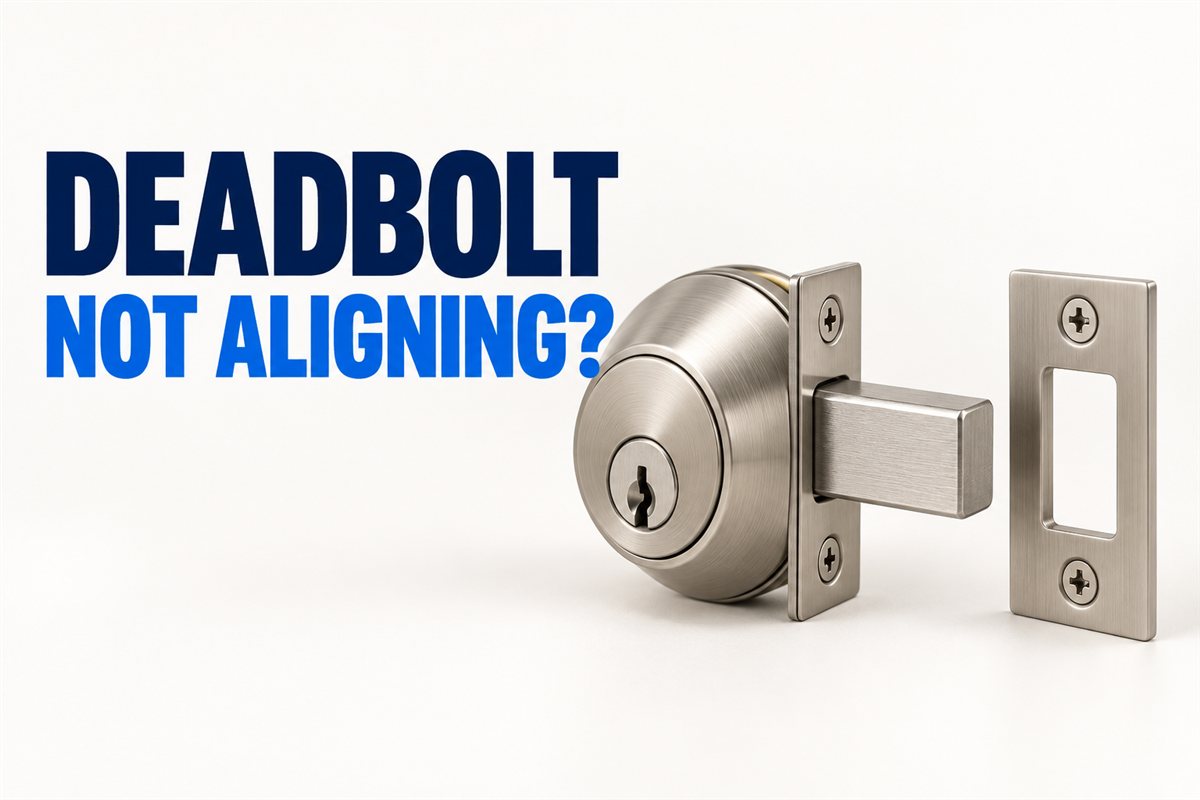
What to Observe Without Forcing the Lock
If you already have authorized access, observe ordinary operation while maintaining access to the home. Do not close yourself outside to reproduce the fault. Stop if the key bends, the thumbturn binds severely, the door is damaged, or someone cannot exit normally.
- Does the bolt move normally when the door is open?
- Does resistance begin only after the door meets the frame?
- Have you previously needed to lift, push, or pull the door to lock it?
- Are there visible rubbing marks around the strike or bolt?
- Did the problem begin after painting, weatherstripping, hinge work, or a lock installation?
- Does the symptom change during the day or remain constant?
Record what you notice without deliberately stressing the door. Photographs of visible contact marks, gaps, and the installed hardware can help the provider prepare. Share them directly and avoid exposing keys or private access information in public posts.
Match the Symptom to the Inspection
| Symptom | Possible area to inspect | What to tell the provider |
|---|---|---|
| Bolt moves freely open, but binds closed | Strike alignment, door position, and pocket clearance | Where resistance begins during ordinary operation |
| Bolt binds both open and closed | Lock mechanism or installation | Whether key and inside thumbturn behave differently |
| Door must be lifted to lock | Hinges, sag, and frame alignment | When the condition began; do not keep forcing it |
| Problem followed new weatherstripping | Door position and seal compression | Which materials were changed |
| Visible cracks or damaged receiving hardware | Door or frame damage and hardware integrity | Photos and any recent impact |
The table organizes a repair request; it is not a diagnosis. A change that makes the key turn once may leave the cause unresolved. The goal is normal bolt engagement with a sound door and frame.

Why Changing the Key Does Not Fix Alignment
Rekeying changes which compatible keys operate a cylinder. It does not move the strike, repair a sagging door, or create clearance for the bolt. If your concern includes keys held by former occupants, that can be addressed separately from the mechanical closing problem.
The existing guide to rekeying home locks covers that access decision. This article focuses on a deadbolt’s movement into the frame, rather than repeating general rekeying advice or choosing a new key system.
Similarly, buying an electronic deadbolt does not eliminate poor door fit. Correct preparation remains important for both manual and powered hardware. Repair the underlying issue before assuming a different product will solve it.
Door Position and Hardware Compatibility Matter
A technician may need to inspect the door, hinge condition, strike position, receiving pocket, and the way the lock was installed. Hardware that looks similar is not automatically a suitable replacement. Door thickness, backset, bolt design, and the existing preparation can affect the available options.
Schlage’s door preparation checklist treats alignment and preparation as part of installing exterior hardware. Manufacturer measurements are product-specific; do not treat them as universal targets for an unidentified door.
Avoid filing the bolt, enlarging the frame opening, or moving the strike without understanding the cause. Modifying the receiving hardware can affect engagement and may complicate later repair. A damaged or poorly fitted opening can also require a carpenter or door specialist in addition to lock work.
What Recent Changes Can Reveal
Tell the provider about painting, added seals, door replacement, hinge work, or a recent impact. A new seal can change how the door rests against the frame; hinge or installation changes can affect the bolt’s relationship to the receiving hardware. The timing is a clue, not proof of responsibility.
For a Mesa exterior door, note actual sun exposure and any time-of-day pattern. Do not assume heat or building movement caused the fault without inspection. A constant symptom and an intermittent one may need different follow-up observations.
If you rent or live in a managed property, notify the responsible owner or manager before modifying the door. Authorization, building requirements, and responsibility for frame work can differ from responsibility for the lock itself.
What to Confirm Before and After Repair
Mesa Premier lists lock repair and installation among its residential locksmith services. Explain that the deadbolt operates with the door open but resists when closed. Ask whether the team can inspect your hardware and whether any door or frame work would require another professional.
Confirm the diagnostic scope, parts, and additional-work approval before the visit. Diagnosis, adjustment, replacement hardware, and structural repair are not necessarily the same item in a quote. Request an explanation of what was found and why the proposed remedy suits the opening.
After work, ask for normal open-door and closed-door operation to be demonstrated according to the model’s instructions. Confirm that the bolt engages as intended and that inside operation remains usable. Keep the invoice and report a recurrence instead of continuing to force the mechanism.

Build a useful service record when a deadbolt won’t lock
A short record of the original complaint makes the appointment more productive. Identify the affected exterior door, the hardware already installed, and the difference between ordinary open-door and closed-door operation. Record what you already observed without repeating forceful attempts. Include when the condition first appeared and whether it followed any work on the opening.
If the deadbolt won’t lock consistently, describe that inconsistency. A door that operates normally in the morning but resists later needs a different history from one that has never worked correctly since installation. Actual observations help the provider decide what to inspect. A weather pattern alone does not establish the cause or justify a particular modification.
Separate observations from proposed remedies
Write down the symptom before naming a part to replace. For example, report that the bolt meets resistance as it enters the frame rather than declaring that the cylinder is broken. If the thumbturn and key behave differently, include that distinction. The technician can then relate the complaint to the complete opening instead of accepting an unverified parts order.
Keep photographs limited to visible hardware and contact marks taken from a safe position. You do not need to remove trim or expose internal components to provide useful information. Avoid sharing an image of a key blade or private entry information publicly. Ask which photographs the provider actually needs before sending a large collection.
Compare repair proposals by the outcome they address
When a deadbolt won’t lock, a meaningful proposal explains which finding it addresses. Adjustment, replacement hardware, and door or frame work can have different purposes. Ask how the recommendation relates to the reported resistance and whether another trade needs to participate. An estimate should make the approved scope understandable before any material is removed or changed.
A proposal to rekey the cylinder addresses an access arrangement, while a proposal concerning door fit addresses a mechanical relationship. Both may be appropriate in the same visit, but one does not stand in for the other. Keep each requested outcome visible so that a successful key change does not obscure an unresolved closing complaint.
Clarify responsibility in managed properties
Tell the owner or manager if the deadbolt won’t lock through ordinary operation. Explain whether the opening can be secured and whether inside exit is affected. Ask who can approve lock work and who is responsible for the door and frame. Written authorization helps avoid scheduling a visit that cannot proceed because the person present lacks approval.
If a recent installer is involved, preserve the installation details and describe the timing without assigning blame before inspection. Product information, receipts, and any earlier service notes may help identify the equipment. Ask how proposed changes affect the existing installation arrangement and what documentation will be provided at completion.
Five practical questions before approving work
1. Which operating condition is being evaluated?
Confirm that the service request includes the difference between open-door and closed-door behavior. If the deadbolt won’t lock only when the door rests against its seals, that condition belongs in the brief. Ask whether the assessment covers the lock, receiving hardware, and relevant door fit rather than assuming every item is included in a general visit.
2. What finding supports the proposed change?
Request a plain explanation of what was observed and why the recommendation follows. Visible rubbing can be a clue without explaining the entire cause. The provider should connect the proposed remedy to the actual opening and installed model. Ask about any condition that will remain outside the approved scope.
3. Are the proposed parts appropriate for this opening?
Confirm compatibility before purchasing replacement equipment. Similar appearance does not establish the correct fit or preparation. If you are considering an upgrade, discuss that preference separately from the immediate complaint. Ask whether the existing keys and inside operation will change, and which product instructions apply to the completed arrangement.
4. How is additional work approved?
Agree on who can authorize findings that extend beyond the original request. Ask how a recommendation for door or frame work will be communicated and whether another appointment is needed. Keep the approval route practical when a property manager cannot attend. Do not treat an initial description as a guarantee of the final repair scope.
5. What will demonstrate completion?
Ask for the agreed normal-use checks to be explained before work begins. The result should address the original resistance without relying on lifting or forceful pressure as a routine technique. Confirm which functions can be demonstrated safely and which remaining conditions require follow-up. Keep a record of the explanation and any limitations.
Follow up on recurrence with comparable facts
If the deadbolt won’t lock again after service, report the same basic observations used in the original request. State whether open-door operation remains normal, whether the resistance is constant, and what has changed since the visit. That comparison is more useful than trying unrelated remedies that alter the condition before the provider can assess it.
Retain the invoice, product details, and agreed next steps. Let other authorized household members know about any unresolved symptom and the recommended response. A spare key does not correct resistance at the frame, and a successful turn on one occasion does not explain an intermittent complaint. Keep ordinary access and normal exit central to the follow-up decision.
Frequently Asked Questions
Why does the deadbolt work only with the door open?The bolt has no receiving frame to enter while the door is open. If operation changes when closed, contact at the strike or pocket is one possible explanation. Describe that contrast to the technician. Installation and lock wear can still contribute, so the observation does not prove a single cause. |
Should I force the key until the bolt turns?No. Stop when normal movement meets resistance rather than applying extra leverage. Forcing the key or thumbturn can damage components and leave you with another access problem. Maintain authorized access and arrange inspection if the opening cannot be secured normally or the mechanism begins to bind severely. |
Will rekeying solve this problem?Rekeying changes key access within a compatible cylinder; it does not correct the door’s position or strike alignment. If you also need to change which keys work, explain both needs to the provider. The quote and repair plan should distinguish that access concern from the mechanical closing symptom. |
Do I need a new deadbolt immediately?Not necessarily. Confirm the cause before choosing replacement hardware. A new lock may still bind if the door or receiving preparation remains unsuitable. Ask for the findings, available repair options, and any limitations. Replacement is a decision to make after the opening and existing hardware have been assessed. |
Why do I have to lift the door to lock it?That observation can point toward door position, hinge condition, or alignment, but it needs inspection. Report how long it has happened and any recent door work. Do not make lifting or forceful pushing your routine workaround; ask what repair would restore ordinary locking without stressing the opening. |
Could new weatherstripping affect the deadbolt?A change to the seal can alter the position in which the door rests against the frame. Tell the provider what was installed and when the symptom began. That timing is useful evidence, but the technician should still inspect alignment and hardware before attributing the entire fault to the seal. |
Should I enlarge the hole in the door frame?Do not alter the receiving pocket based on a guess. The cause may involve alignment, hardware preparation, or door position rather than pocket depth alone. Modifications can affect engagement and complicate repair. Ask the technician to explain the required preparation for the actual lock and the condition of the frame. |
Does a smart deadbolt prevent alignment problems?No. Powered hardware still needs appropriate door and frame preparation to operate normally. Changing products without addressing resistance may leave the symptom unresolved. If considering an upgrade, ask the provider to evaluate fit and installation requirements separately from the features or access methods of the replacement. |
Who authorizes repair on a rented home?Contact the owner or property manager and follow the applicable approval process before changing hardware or the frame. Explain whether the door can be secured and whether normal exit is affected. Responsibility for lock work and door repairs may differ, so clarify authorization before a provider begins modifications. |
What should I verify after the repair?Ask for normal operation with the door open and closed, following the installed model’s instructions. Confirm the explanation of the work and any remaining door or frame concerns. Keep the service record and report recurring resistance rather than forcing the lock. One successful turn is not a guarantee against future faults. |
Final Thoughts
If your deadbolt won’t lock when door is closed, the contrast with open-door operation is an important clue. Describe the symptoms, avoid force, and have the door, strike, and lock assessed together before selecting a repair.
For residential lock concerns in Mesa, call (480) 764-2839 or contact Mesa Premier Locksmith & Garage Repair. Explain the affected door and how the deadbolt behaves so the team can confirm service options and provide a quote.